
Confident interviewing
When it comes to interviewing, I recall the advice my successful, sales-professional mother gave me: “You only get one chance to make a first impression.” Even in pastoral candidate interviews, people make judgments remarkably quickly. Once formed, they can solidify into deep-seated perceptions that are slow to change.
This isn’t meant to make you overly cautious and self-conscious. Rather, it is meant to raise your awareness of the importance of the interviewing process.

Prepping your technology

It is highly likely that your first and second interviews will be conducted via Zoom, Microsoft Teams, or another teleconferencing platform. Just as with secular roles, thoughtful preparation can go a long way to reduce distractions. There are many online articles on this topic. I suggest going to YouTube and reviewing some of the offerings you will find there.
Here are my interview top tech tips:
Test your technology to ensure everything works—video, speakers, headphones, and microphone.
Sit about two feet from the camera (approximately an arm’s length) so your face is clearly visible.
Position yourself so you’re centered on the screen with the webcam at or slightly above eye level. (Pet Peeve: people have their video camera too close and too low, providing you with a good close up of the inside of their nose.)
Remove visual clutter from the camera’s field of view. If the background space is busy or distracting, use a simple digital background or the “blur” feature.
While pets and children may seem endearing, they can quickly become a source of distraction during first interviews.
Reduce background noise as much as possible.
Ensure your primary light source is in front of you. Avoid lighting from behind, which can cast your face in shadow.
If using a laptop or desktop, close all unnecessary programs—and, if possible, turn off notifications to minimize interruptions.
Maintain eye contact with the camera—just as you would with the interviewer in person. This simulates a face-to-face connection.
What to wear for an online interview

When I worked in workforce development, my colleagues went on and on ad nauseam about what constituted “proper” interview attire. So much of it boiled down to individual taste and the culture at the organization (church) where you are interviewing. Here are a few guidelines to help with this.
If available, find a video from a recent worship service at the church where you are applying. Take note of what the preacher on the platform is wearing. Dress to that level of attire. If in doubt, dress slightly more formal.
Poke around the church’s website – look for pictures of ministries and of ministry leaders. Take your cue from what you see.
- For the interview, make sure whatever you are wearing:
- Fits and is comfortable. Clothes don’t fit the same way when you sit as they do when you are standing. Ask yourself: “does it fit when I sit?” If the buttons on your shirt are screaming for mercy when you sit down, better to go with the next size up.
- Is clean and ironed. (My wife hates wrinkles, so I am usually good with this!)
- Has no tears or holes
- Is not too loud – you don’t want to look like a clown.
- Is not too dark – you don’t want to look dark and foreboding.
- Attend to your personal hygiene – just as if you were engaging in a live, face to face interview.
- For piercings and tattoos.
- For some churches, highly visible piercings and tattoos are not a big deal. For others, maybe most, they could be a deal breaker.
- I suggest that you make a tasteful disclosure of this early in the pastoral interview process.
Answering behavioral interview questions using the "CAR" method
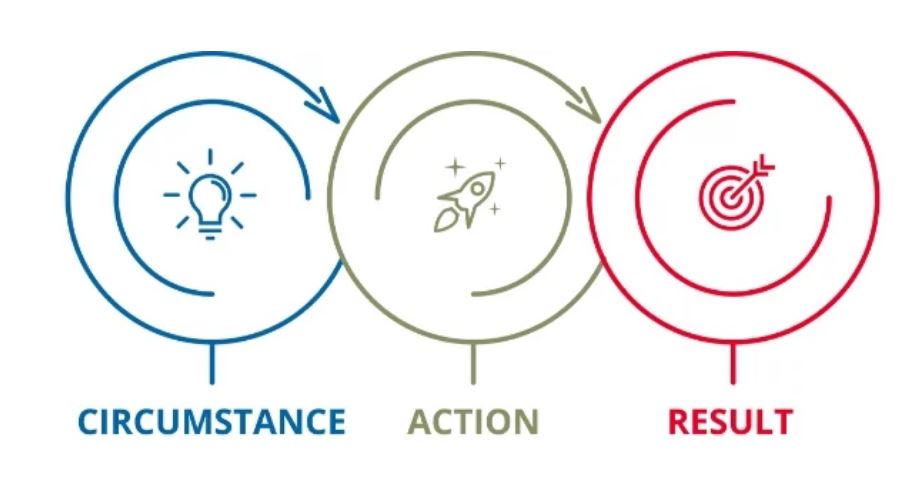
The CAR Method for Answering Interview Questions
Nope—this has nothing to do with your 2016 Toyota Camry.
As with secular work, interview questions for pastoral ministry tend to be behavior-based. Rather than asking simple “yes” or “no” questions , interviewers will ask you to provide examples that demonstrate how you actually behaved in various ministry and life situations.
This is a well-tested approach to interviewing and is based on the belief that past performance is a strong indicator of future results.

What CAR stands for:
- C Circumstance: Describe the circumstance you were facing.
- A Action: Outline the actions you took to respond to the circumstance.
- R Result: What was the result—the outcome—of your actions?
Examples of behavioral interview questions
- Tell us about a time when you had to respond to a conflict in a previous ministry or work setting.
- Can you give an example of a time when you helped to reorganize or revitalize a struggling ministry?
- How have you responded to criticisms that you felt were either unfair or unfounded?
The CAR method is a tool that is used to answer action-oriented interview questions. CAR stands for three elements of the answer to nearly every behavioral interview question. The Circumstance you experienced, the Action you took to respond to it, and the Result – what was the outcome.
Advantages of CAR
- CAR gives your answers structure and helps you stay focused on the question being asked.
- It communicates a more action-oriented and intentional approach to problem-solving.
- Helps you to better communicate the scope of your experience and the skills/competencies you have developed.
Example: Tell us about a time when you had to respond to a conflict in a ministry or work setting.
Circumstance: While ministering at First Community Church, there was growing concern regarding our nursery ministry. The nursery was originally set up to accommodate infants and children up to age 2. Over time, the nursery became a drop-off location for children in the three- to five-year-old range. This created frustration for our nursery volunteers and the parents of the kids.
Action: Our nursery coordinator and I had a conversation with the parents of the three- to five-year-old children to better understand their needs. Most of them felt that their kids were not ready for the more structured Sunday school classes that were being offered. It took a while, but we developed a new area called “Samuel’s Nook.” This was a place for kids who were too old for the nursery but not quite ready for a more structured Sunday School class.
- Result: This helped relieve pressure on our nursery volunteers and provided a solution for parents who wanted to be at church but needed structure for their beginner-aged kids.
What if I never had experience in that particular area?
The purpose of interview questions is to help identify your problem-solving skills and how you respond under pressure. If you have never had a particular ministry experience, avoid saying, “I don’t know, that never happened to me.” Instead, give a response indicating what you would do if you faced that situation.
“I don’t think I have encountered that in ministry. If I did, though, this is what I think I would do…”
Then briefly outline the steps you would take.
Keys to success when using “CAR”
- Keep it focused: Stay on track with the intent of the question. In the above example, focus on the steps you took to respond to a conflict or challenging situation.
- Keep it short: If your answer takes more than a minute or two to explain, you are giving too much information.
- Keep it positive: Everybody loves a happy ending. If the situation did not end as positively as you would have liked, share briefly what you would do it differently in the future or share a valuable lesson you took away from the experience.

Pet Peeve #0314 “That’s a good question.”
Please, I’m begging you—stop starting your interview answers with, “That’s a good question.”
I already know it’s a good question—that’s why I asked it. If I thought it was bad, I wouldn’t have bothered. Saying “that’s a
good question” doesn’t strengthen your answer or make me more interested in what you have to say.
I understand what you’re going for—you’re trying to sound affirming. But when every…….single……response starts “that’s a good question”, it comes off as repetitive, insincere, and patronizing. I am not looking for feedback on the quality of my questions. If I did, I’d ask.
OK. I feel better now.
Responding to awkward and personal interview questions

New to the pastoral search interview process? Prepare for personal questions!
The rules that apply to the types of questions that can be asked in a secular employment interview do not apply to the world of pastoral interviews. No question is off the table.
According to Church & Tax Law: “The ministerial exception generally bars civil courts from reviewing decisions by churches and other religious organizations regarding the selection of ministers. This exception permits religious organizations to ask applicants for ministerial positions any questions they wish.”
Here are a few examples of questions you might be asked.
- How old are you? How old is your spouse?
- How much debt do you have?
- Does your spouse support you being in ministry?
- How did you and your spouse meet?
- Do you have any addictions or mental health issues we need to be aware of?
- How many children do you have / do you hope to have?
- How are you planning to educate your children? Public, private, homeschool?
- What are your thoughts on gun control, immigration, abortion, same-sex marriage, etc.
- What do you do on days off / during your free time?
(I recently helped a church through their pastoral search process. The search committee asked many of these questions.)
Interview Coaching: tips for responding to personal questions

- Be mentally and spiritually prepared—expect that questions similar to those above will surface at some point during your pastoral search journey.
- Stay focused and don’t become defensive or arumentative. Responding with humility and a gentle spirit will serve you well.
- Give the church the benefit of the doubt—assume questions stem from genuine curiosity about you, your family, and how well you might fit their culture and ministry.
- Some churches may be coming off a bad experience with a previous ministry leader. They may be looking to prevent a repeat.
- Spend time reviewing the church’s website and social media pages. You may discover potential hot‑button issues that could arise during the interview.
- Above all, don’t feel compelled to share more than you’re comfortable with. Tailor your responses to reflect what you’re willing and ready to disclose.
Check out these sample answers.
Question
Sample Answers
How much debt do you currently have?
- “We have educational loans that we’ve been paying off for the last several months/years. While it’s been a challenge at times, we’ve managed to balance meeting our obligations while providing for our family.”
- “We initially had substantial debt from some challenging financial situations early in our marriage. We’ve been working with a Christian credit counselor and are committed to paying off our debts in a timely fashion.”
- “Honestly, we are buried so deep in credit-card debt that we don’t think we’ll ever see the light of day! We’re hoping our next church will bail us out.” (Just kidding! Please don’t say that.)
Tip: Most churches are not looking for a clone of David Ramsey. The key to answering questions related to debt is being able to “give a good report.” Most churches will be satisfied if you recognize your situation and can outline the steps you are taking to resolve any excessive debt issues.
Also, questions about debt are related to how the debt came about. Churches will view $50,000 in medical debt incurred caring for a sick child very differently from $50,000 in credit-card debt brought on by uncontrolled retail therapy and spending on luxury items.
Have you ever struggled with any addictions or mental health issues?
- During college, I experienced bouts of anxiety and depression due to the heavy academic load I was carrying and the emotional impact of my parents’ divorce. I connected with a Christian counselor who helped me through that difficult period. I also have an accountability team and a prayer partner with whom I check in regularly.
- My wife and I are doing well, but our 14-year-old daughter has been diagnosed with moderate to severe ADHD. She generally does well, but loud noises and excessive visual stimulation can sometimes overwhelm her. This does create challenges for us, but we’ve learned to lean on the Lord and on the kindness and understanding of God’s people.
- “Eleven years ago, I was in a car accident that resulted in a broken hip and a broken ankle. Long story short, that injury led to a five-year addiction to prescription painkillers. I hit a breaking point, and by the grace of God, I’ve now been free from that dependency for almost six years. While I still must remain vigilant, the experience has given me a heart for those who struggle with addiction.”
TIP: Conversations about addiction and mental health challenges are becoming more accepted. As with discussions about financial hardship, churches want to know that you are no longer in the grip of the addiction and that positive action steps have been taken.
Finding Grace: when will the past finally be in the past?
As shown in the list of questions above, some interview questions may force you to revisit painful and embarrassing events from your past. Fortunately, when it comes to our past indiscretions, the Scriptures give us great assurance of God’s forgiveness.

- 2 Corinthians 5:17 Therefore, if anyone is in Christ, he is a new creature; the old things passed away; behold, new things have come.
- Psalm 103:12 As far as the east is from the west, so far has He removed our transgressions from us.
- Micah 7:19b Yes, You will cast all their sins into the depths of the sea.
While we are forgiven and cleansed in the eyes of God, the church still has a responsibility to carefully consider the qualifications and character of the person who is going to shepherd the flock. If there is something in your past that may impact your ability to be placed in ministry, take the necessary time to seek the Lord and formulate a response should a question about it arise. (Eventually, it will come up and it is best if you are prepared for it.)
Their are four factors that determine how impactful past transgressions could be and how willing the church will be to let your past remain in the past.
- How serious was the matter?
- How long ago did it occur?
- What actions have you taken to address the impact of what you did?
- What is your level of contrition?
Obviously, the more serious the issue and the more recently it occurred, the greater the impact on your potential candidacy. That said, the actions you have taken—such as accepting responsibility, making restitution, pursuing personal discipleship, and demonstrating contrition can help pastoral search committees see your heart and the sanctifying work of Christ in your life.
While it may be painful and embarrassing to revisit these matters, be careful not to disqualify yourself. Allow the pastoral search committee to determine whether your situation exceeds their ability to proceed with your candidacy.